

个人简介
生死狙击


推荐博文
- ·杭州首个千吨级内河港即将运行
- ·《GTA6》新泄露展示实体盘 黑客呼吁:实体很重要!
- ·UP Crime: प्रयागराज में छात्र की खौफनाक तरीके से हत्या, अलग-अलग जगहों से मिले हाथ-पैर और सिर
- ·China approves first-ever drug for acute mountain sickness prevention
- ·NZ’s push for joint statement on China missile test falls flat amid growing Pacific Islands autonomy
火星情报局
2026-08-26
分类: 白夜行
火星情报局
China’s market structure improves in H1 as AI, robots drive emerging industries_我的网站

A | iPhone 14 Plus 和 iPhone 14 Pro Max 在没有佩戴保护套的情况下,从 6 英尺高处分别以屏幕朝下、背面朝下跌落到地面上,以及侧面朝下跌落在阶梯上。

B |
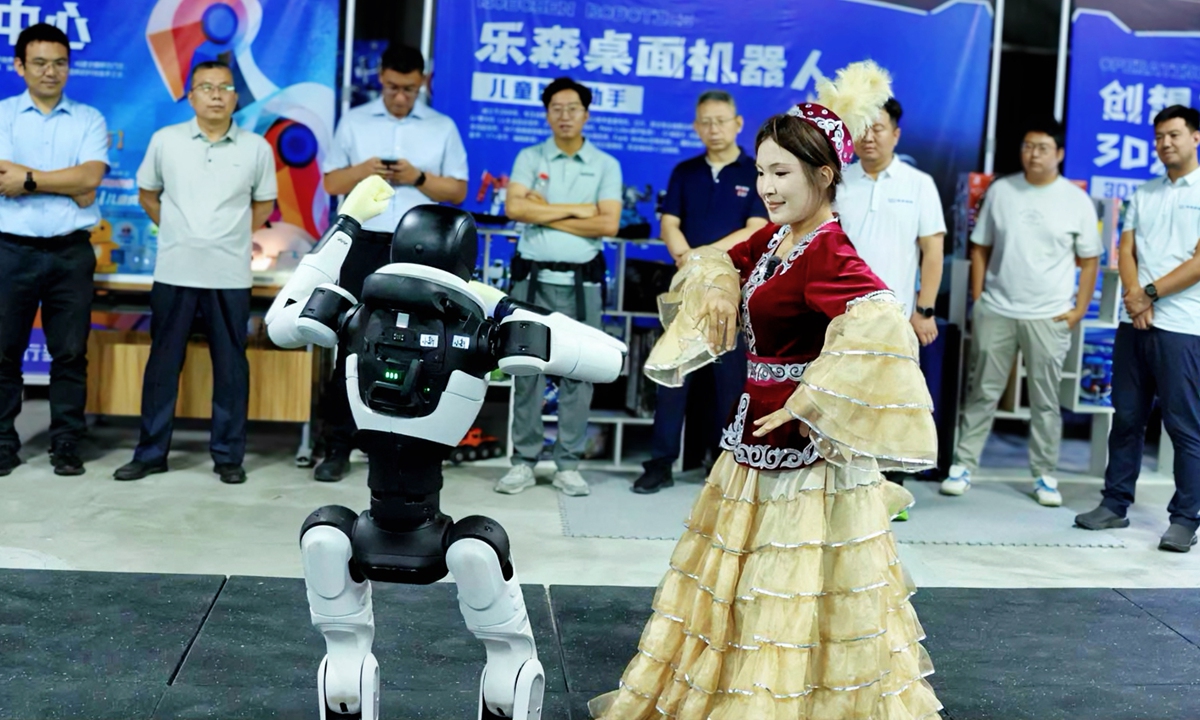
China's market landscape experienced a structural optimization in the first half of 2026, powered by a lineup of emerging and future-oriented industries.
Official data from the State Administration for Market Regulation (SAMR) shows 561,000 new enterprises were registered across China's strategic emerging and future industries, spanning next-generation information technology, high-end equipment manufacturing, generative artificial intelligence (AI) and humanoid robotics.
The rapid expansion of these new market players is revamping China's industrial layout and fast-tracking the cultivation of new quality productive forces, underpinning steady high-quality economic upgrading, experts said.
Cutting-edge technology sectors stood out as the brightest growth spots, posting explosive year-on-year expansion. The generative AI industry recorded a 28 percent surge in new start-ups with 55,000 newly established firms, while the humanoid robot sector saw a 9.5 percent rise, adding 116,000 new enterprises.
"It shows that China's innovation momentum is exceptionally strong and remarkably broad-based — a trait that is virtually unique in the global landscape," Chen Jing, a vice president of the Technology and Strategy Research Institute, told the Global Times on Sunday. "The explosive growth of new enterprises in AI and robotics reflects the extraordinary depth and diversity of China's industrial ecosystem."
Outside high‑tech sectors, 3.957 million new services‑sector enterprises were established and booming emerging‑consumption businesses injected fresh impetus into domestic demand, the SAMR said.
The number of new firms in software and telecommunications services rose 3.3 percent to 322,000. Inspection‑and‑testing businesses soared 43.9 percent, and entities dedicated to the commercialization of scientific‑research achievements climbed 6.8 percent to 459,000.
Manufacturers accelerated industrial upgrading with companies moving up the value‑chain ladder, the SAMR said.
High‑end equipment industries have maintained growth during the first half, with 28,000 newly registered firms and a year‑on‑year increase of 2.5 percent.
A total of 330,000 high‑tech‑manufacturing enterprises were operating as of the end of June, including 15,000 newly established ones. Start‑ups engaged in the production of spacecraft and launch vehicles rocketed 185.7 percent. New producers of fiber optic cables climbed 129.4 percent and integrated‑circuit businesses increased by 24.2 percent.
"We are witnessing a dual-engine growth model, where new consumption in the services sector and high-tech services reinforce each other, while the digital and real economies integrate at an accelerating pace. At the same time, the intelligent transformation of manufacturing is picking up speed," Chen said.
The dividends from this industrial transformation are generating a powerful multiplier effect, creating a virtuous cycle led by innovation, Chen noted.
"The first‑half growth and structural shifts among China's market‑based businesses mirrored the country's overall economic momentum and industrial makeup. New‑emerging sectors, core strategic pillar industries and forward‑looking future industries registered the fastest business expansion," Tian Yun, a veteran economist, told the Global Times on Sunday.
These solid achievements fully reflect the success of China's innovation-driven economic strategy.
Strong policy support for specialized, sophisticated, unique and innovative enterprises has fueled this industrial boom while these market players have helped China shore up, upgrade and extend its industrial chains, Tian noted.
This business boom lines up with this year's stellar foreign trade figures, Tian noted.
China's exports rose 23.9 percent year-on-year in dollar terms in July, data from the General Administration of Customs showed on Friday.
Exports of high-tech products, including industrial robots and 3D printers, surged by more than 50 percent year-on-year, outpacing the 39 percent growth recorded in the first half of the year, according to the Xinhua News Agency.
The growing pool of high‑quality market players signaled lasting improvements in China's global competitiveness, industrial upgrading capacity and the standard of goods and services. Broader product ranges, better‑made commodities and improved supporting services will deliver durable new‑growth momentum, Tian noted.
。尽管这两款 iPhone 正面和背面都配备了 Ceramic Shield,但在摔落后出现了明显损坏。

C | iPhone 14 Plus 正面朝下跌落到地面时,一侧碎裂,大量松散的玻璃碎片使手机难以操作。iPhone 14 Pro Max 受损更严重,一侧和角落出现较大的靶心裂缝。iPhone 14 Plus 背面朝下跌落到地面,其摄像头外壳受损,一侧出现靶心裂缝。根据 Allstate Protection Plans,iPhone 14 Pro Max 遭受了“灾难性损坏”。玻璃背面完全破碎,大部分玻璃完全从设备上脱落。此外,相机外壳也受到严重损坏。iPhone 14 Plus 侧面掉落到楼梯之后,受到的损坏很小——角落只有几处磨损。不过 iPhone 14 Pro Max 的表现也不佳。后面板破裂,边角磨损,按钮凹陷,相机外壳损坏。Allstate Protection Plans 指出,尽管损坏,每个设备仍能正常运行。
Current article:http://c44.kenouguanruilianshanxiangshu.cfd/news/20260826_86282.html
Published on:01:42:30
相关热门文章
- 定位纯电小型SUV/或三季度上市 五菱缤果S官图
- 奥克兰免费怀唐伊音乐会火热开启 交通严重拥堵
- WNBA申请一个商标,惊动了两支棒球队?
- 对中东地缘冲突担忧缓解,国际油价25日显著下跌,当日收盘时下跌超3%
- 上海一纹眉店用护手霜代替麻药制造剧痛,逼迫顾客加钱升级套餐,52人遭“疼痛”逼单,主犯被判1年7个月


